1/3 Buzand Str., Yerevan 0010, RA
Berezhany is the administrative centre of the Berezhany in the Ternopil Region of Ukraine. Armenians settled in the city from the second half of the 17th century and enjoyed broad autonomy, their own voyt (mayor/headman), and a court. The most important monuments of the Armenian historical and cultural heritage in Berezhany are:
1. The old wooden Armenian church.
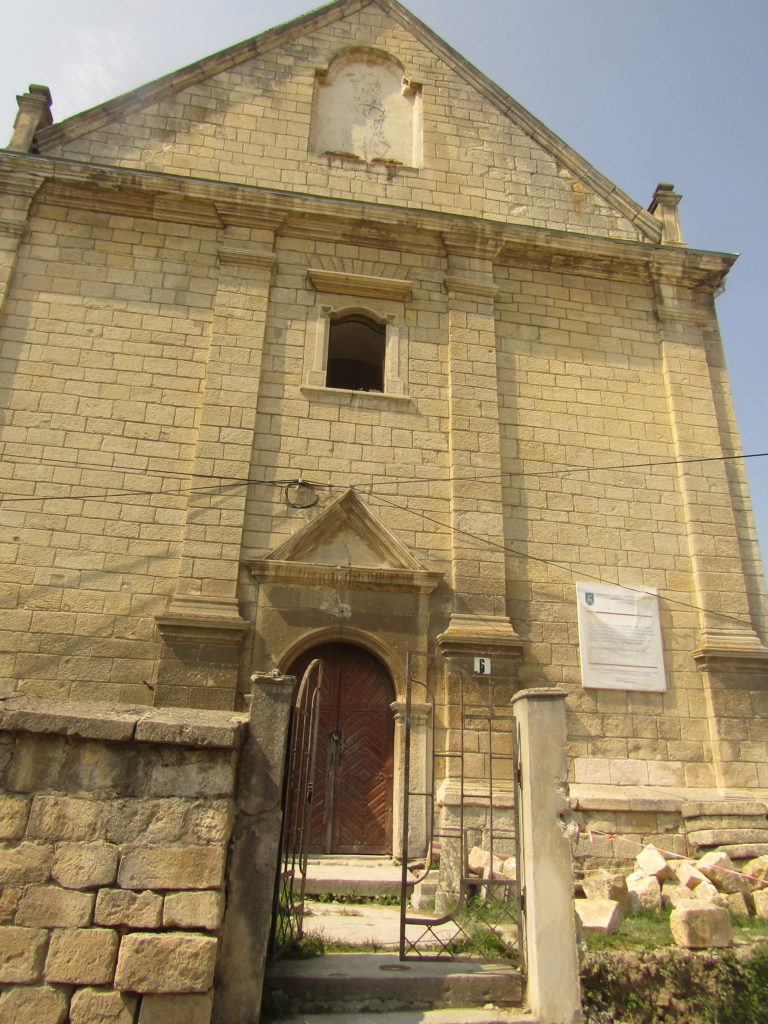
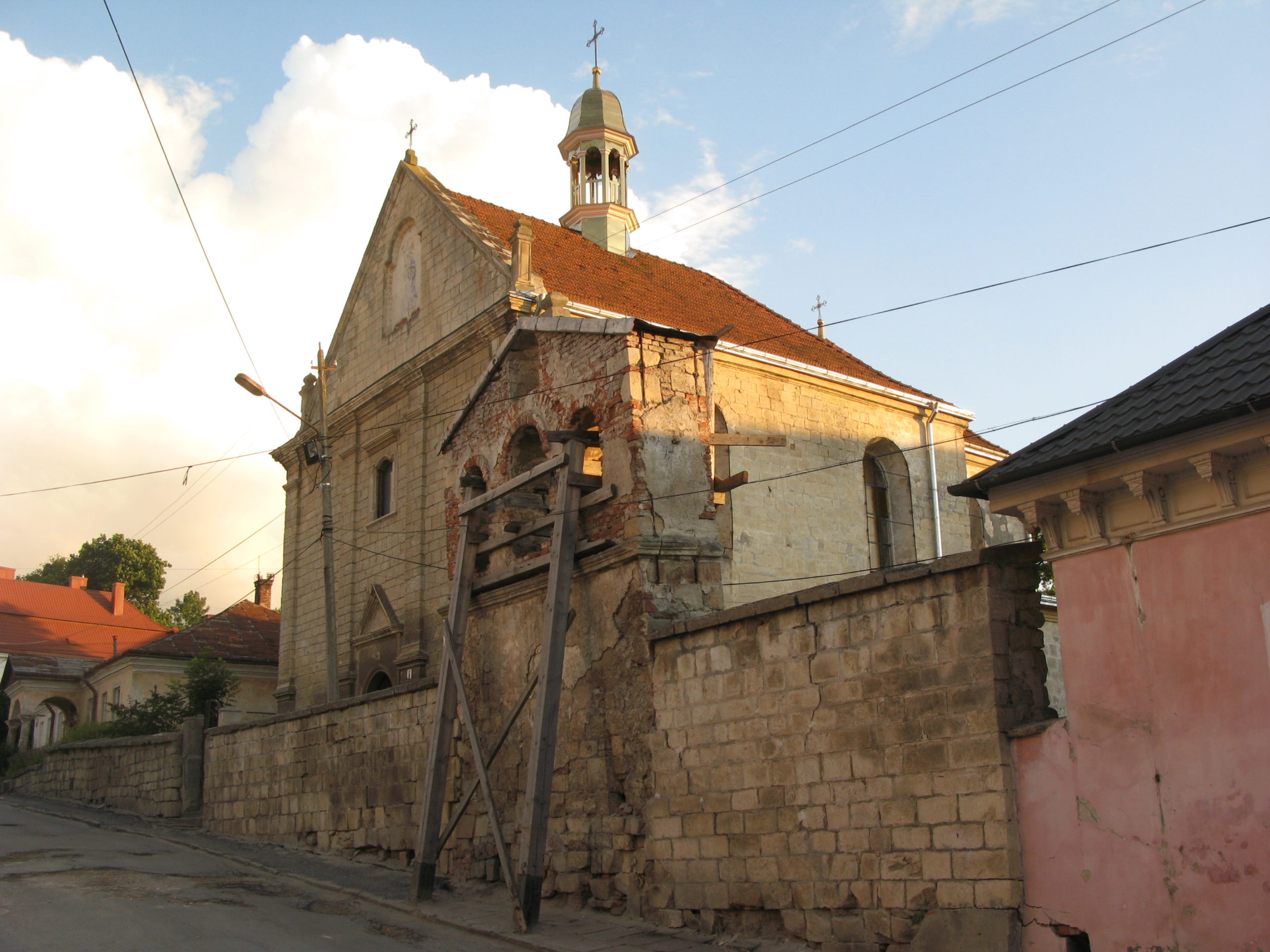
2. The Armenian Catholic Church of the Immaculate Conception of the Holy Mother of God (Blessed Virgin Mary), built in 1764.
3. The buildings adjacent to the church: the belfry, the school building, and the cleric’s dwelling, as well as the stone walls surrounding the church complex (Vardanyan, pp. 47–48).
Armenian Catholic Church of the Immaculate Conception of the Holy Mother of God (Blessed Virgin Mary) (Saint Gregory the Illuminator)
The church is located in Berezhany on Virmenska (Armenian) Street. It was built in 1764 on the site of the former wooden church at the initiative of the Armenian priest Deodat Horbaz. On September 11, 1791, the church was consecrated by the Armenian Catholic Archbishop of Lviv, Yakob Tumanovich (Barącz, p. 79).
At the end of the 18th century, after the partitions of the Polish-Lithuanian Commonwealth, Berezhany came under the rule of the Austrian Empire. The Armenian community lost its autonomy, and its population gradually declined.
The church operated actively until 1945. The last clergyman of the church, Kazimierz Romashko, was arrested and convicted on charges of anti-Soviet activities (Vardanyan, p. 46).
During this period, the church was confiscated and used for various purposes: first as a granary, then as a Polish Catholic church, and later as a weapons depot. In 1828, the Armenian community managed to reclaim and renovate the church. On September 10 of the same year, it was reconsecrated by the Armenian Catholic Bishop of Lviv, Samuel Stefanowicz.
During the Soviet years, the church was once again turned into a warehouse, and in the early 1990s, it was briefly handed over to the Ukrainian Orthodox Church. During that period, renovation works were carried out inside the building, during which numerous bas-reliefs were destroyed. Nevertheless, traces of them remain to this day.
Currently, the church is inactive. The building’s roof is in a dilapidated state, and the monument is in need of restoration (Vardanyan, p. 46).
References
1. Father Minas Bzhshkyants, Travel to Poland Venice, St. Lazarus, 1830.
2. Sahak Vardanyan, Armenian Monuments of Western Ukraine, Research on Armenian Architecture (RAA), Vardzk, No. 9, 2013.
3.Barącz, Sadok, Rys dziejów ormiańskich, Tarnopol, 1869։
Photographs: Sahak Vardanyan, Armenian Monuments of Western Ukraine, RAA (Research on Armenian Architecture), Vardzk, No. 9, 2013.